
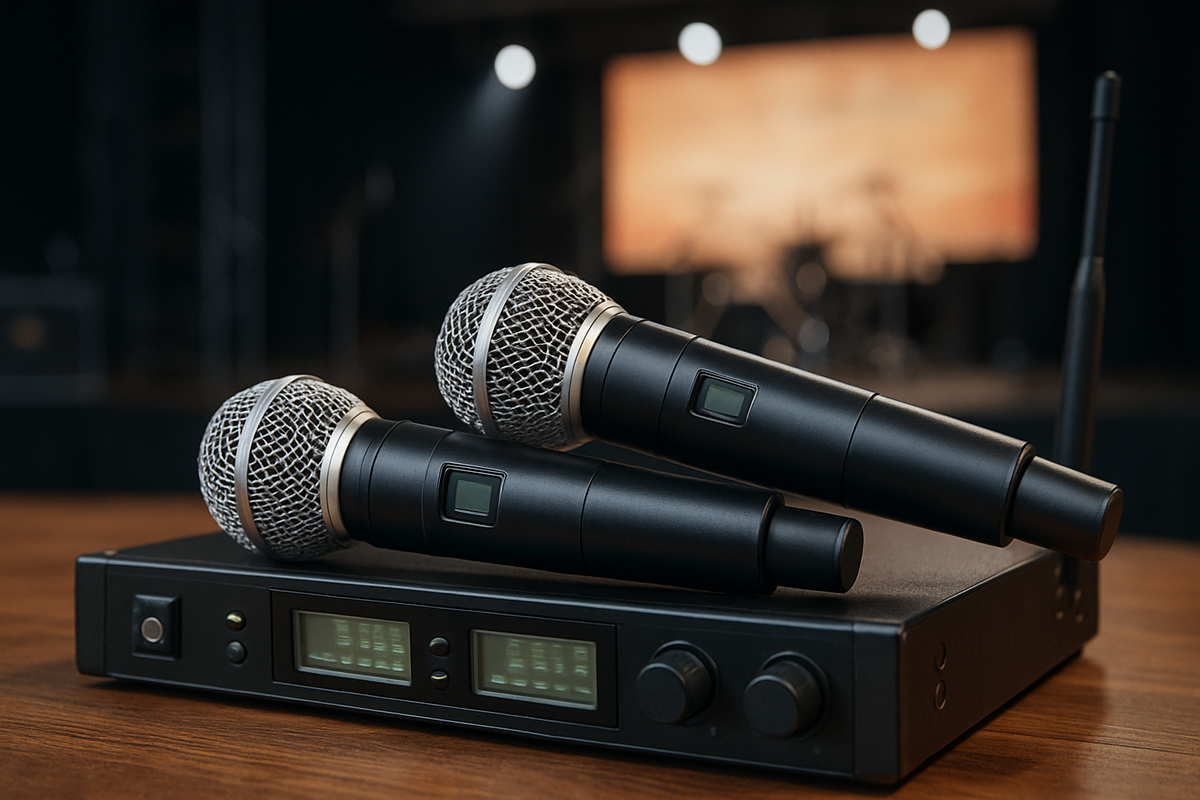
Understanding Wireless Microphone Fundamentals for Professional Events
Selecting appropriate wireless microphone systems for live events requires comprehensive understanding of fundamental audio principles and technological considerations. Professional event production demands meticulous attention to signal integrity, frequency management, and equipment reliability. The complexity of modern wireless audio environments necessitates expertise in RF spectrum allocation, audio processing algorithms, and transmission protocols.
Wireless microphone systems operate through sophisticated radio frequency transmission mechanisms. These systems convert acoustic energy into electrical signals, modulate them onto carrier frequencies, and transmit data through electromagnetic waves to receiving units. Understanding this foundational process enables informed decision-making regarding system specifications and performance expectations.
Digital transmission protocols have revolutionized professional wireless audio applications. Contemporary systems utilize advanced compression algorithms, error correction mechanisms, and encryption technologies to ensure pristine audio delivery. Legacy analog systems, while still functional, lack the sophistication and reliability demanded by high-stakes professional environments.
Frequency Spectrum Considerations and Regulatory Compliance
Frequency allocation represents one of the most critical aspects of wireless microphone selection for professional events. The electromagnetic spectrum faces increasing congestion from cellular networks, television broadcasting, and emerging wireless technologies. Professional audio engineers must navigate complex regulatory frameworks while ensuring optimal performance across diverse geographical locations.
UHF Band Advantages and Limitations
Ultra High Frequency (UHF) bands traditionally offered expansive spectrum availability for professional wireless applications. However, recent regulatory changes have significantly reduced available frequencies. The 600 MHz spectrum auction eliminated substantial portions of previously available UHF bandwidth, forcing manufacturers and users to adapt to compressed frequency environments.
Modern UHF systems must incorporate sophisticated frequency coordination algorithms to prevent interference. Automatic frequency selection capabilities, real-time spectrum monitoring, and dynamic frequency allocation technologies have become essential features for professional applications. These systems continuously analyze the RF environment and adjust transmission parameters to maintain optimal performance.
Alternative Frequency Bands and Emerging Technologies
The 2.4 GHz ISM band presents both opportunities and challenges for wireless microphone applications. While offering substantial bandwidth availability, this frequency range experiences significant interference from Wi-Fi networks, Bluetooth devices, and other consumer electronics. Professional systems operating in this band must employ advanced spread-spectrum techniques and interference mitigation algorithms.
Digital Enhanced Cordless Telecommunications (DECT) technology represents an innovative approach to professional wireless audio. Operating in dedicated spectrum allocations, DECT systems provide excellent interference immunity and superior audio quality. These systems excel in environments where traditional UHF solutions face spectrum limitations or interference challenges.
Audio Quality Parameters and Technical Specifications
Professional wireless microphone systems must deliver exceptional audio fidelity while maintaining robust transmission reliability. Audio quality encompasses multiple technical parameters including frequency response, dynamic range, signal-to-noise ratio, and total harmonic distortion. Understanding these specifications enables informed comparison between competing systems and ensures appropriate selection for specific applications.
"Audio quality in wireless systems depends not only on the microphone capsule but also on the entire signal chain from input to output, including analog-to-digital conversion, compression algorithms, transmission protocols, and digital-to-analog conversion processes."
Frequency response characteristics determine how accurately wireless systems reproduce the original acoustic signal across the audible spectrum. Professional applications typically require flat frequency response curves with minimal deviation from the source material. Specialized applications may benefit from tailored frequency responses optimized for specific vocal characteristics or instrumental requirements.
Dynamic range specifications indicate the system's ability to handle varying signal levels without distortion or noise artifacts. Professional events often involve dramatic variations in source levels, from whispered dialogue to powerful vocal performances. Adequate dynamic range ensures clean reproduction across this entire spectrum without requiring constant gain adjustments.
System Architecture and Channel Management
Professional wireless microphone installations require sophisticated system architecture to accommodate multiple simultaneous channels while maintaining pristine audio quality. Channel density capabilities, intermodulation performance, and frequency coordination algorithms directly impact system scalability and reliability. Large-scale events may require dozens or hundreds of wireless channels operating simultaneously without interference.
For professionals seeking comprehensive wireless solutions, MiCWL Audio offers an extensive collection of professional wireless microphone systems specifically engineered for demanding live event applications. Their wireless microphone systems incorporate advanced frequency management technologies, superior audio processing capabilities, and robust construction designed to withstand the rigors of professional touring and installation environments.
These systems address the complex challenges facing event production companies, corporate meeting planners, and AV integrators who require reliable, high-performance wireless audio solutions. The collection encompasses various form factors, frequency bands, and feature sets to accommodate diverse application requirements and budget considerations.
Multi-Channel Coordination and Interference Mitigation
Effective multi-channel wireless systems employ sophisticated coordination algorithms to prevent intermodulation distortion and maintain clean audio reproduction. Third-order intermodulation products can create audible artifacts when multiple transmitters operate simultaneously within close frequency proximity. Professional systems incorporate intelligent frequency selection algorithms that automatically calculate optimal channel assignments to minimize these effects.
Antenna diversity technology significantly enhances reception reliability in challenging RF environments. Dual-antenna receiver configurations continuously monitor signal strength and automatically switch between antennas to maintain optimal reception. This technology proves particularly valuable in venues with complex acoustic environments or significant RF reflection characteristics.
Scalability and System Expansion Considerations
Professional wireless systems must accommodate future expansion requirements without compromising existing performance. Modular receiver architectures allow incremental channel additions while maintaining centralized monitoring and control capabilities. Network-based management systems enable comprehensive oversight of large-scale installations through intuitive software interfaces.
Cascading capabilities allow multiple receiver units to share antenna systems and distribute audio signals through digital networking protocols. This approach reduces infrastructure complexity while maintaining professional-grade performance standards. Advanced systems support various digital audio networking standards including Dante, AES67, and proprietary protocols.
Physical Design and Durability Requirements
Professional wireless microphones must withstand demanding operational environments while maintaining consistent performance characteristics. Construction materials, ingress protection ratings, and mechanical design significantly impact system longevity and reliability. Touring applications subject equipment to extreme temperature variations, humidity fluctuations, and physical stress.
| Component | Durability Consideration | Professional Standard |
|---|---|---|
| Transmitter Housing | Impact Resistance | Military-grade polymer construction |
| Battery Compartment | Moisture Protection | IP54 or higher rating |
| Antenna System | Flexibility and Strength | Reinforced flexible elements |
| Controls and Switches | Operational Reliability | Sealed tactile mechanisms |
Ergonomic Design and User Interface Considerations
Professional performers require wireless systems that integrate seamlessly with their artistic presentation while providing reliable operation throughout extended performances. Transmitter size, weight distribution, and control accessibility directly impact user comfort and system usability. Intuitive interface design reduces operational complexity during high-stress performance situations.
Display visibility under various lighting conditions ensures performers and technicians can monitor system status without disrupting the artistic presentation. OLED displays with adjustable brightness settings accommodate both dimly lit theatrical environments and brightly illuminated outdoor stages.
Power Management and Battery Technology
Reliable power management represents a critical consideration for professional wireless microphone applications. Battery life, charging systems, and power consumption optimization directly impact operational efficiency and system reliability. Professional events cannot tolerate power-related failures during critical moments.
Lithium-ion battery technology offers superior energy density and charging characteristics compared to traditional alkaline or NiMH alternatives. However, proper charging protocols and thermal management ensure optimal battery longevity and safety. Advanced systems incorporate battery health monitoring and predictive replacement algorithms.
Charging Infrastructure and Power Distribution
Professional installations require comprehensive charging solutions that accommodate multiple transmitters simultaneously while providing status monitoring and automated charging cycle management. Docking stations with networked connectivity enable centralized power management and battery health tracking across entire wireless systems.
External power options provide extended operation capabilities for applications requiring continuous operation beyond standard battery life. Professional systems support various external power sources including battery packs, AC adapters, and phantom power distribution systems.
Integration with Existing Audio Infrastructure
Professional wireless microphone systems must integrate seamlessly with existing audio infrastructure including mixing consoles, digital audio workstations, and signal processing equipment. Compatibility considerations encompass connector types, signal levels, impedance matching, and control protocols.
- Balanced analog outputs provide professional-grade signal integrity and noise immunity
- Digital audio outputs support various formats including AES/EBU and networked protocols
- Remote control capabilities enable integration with lighting and automation systems
- MIDI compatibility allows synchronization with musical performance equipment
- Network management protocols facilitate centralized monitoring and control
Signal Processing Integration and Audio Enhancement
Advanced wireless systems incorporate sophisticated signal processing capabilities including equalization, compression, and noise reduction algorithms. These features enable optimization for specific applications and acoustic environments while maintaining transparent audio reproduction. Professional systems provide user-adjustable parameters without compromising core audio quality.
Integration with digital signal processors and automated mixing systems enables sophisticated audio management capabilities. Automatic gain control, feedback suppression, and dynamic range optimization enhance overall system performance while reducing operator workload during complex productions.
Maintenance, Support, and Long-term Reliability
Professional wireless microphone systems require comprehensive maintenance protocols and manufacturer support structures to ensure consistent performance throughout their operational lifespan. Preventive maintenance procedures, calibration requirements, and component replacement schedules directly impact total cost of ownership and system reliability.
Firmware update capabilities ensure systems remain current with evolving technical standards and regulatory requirements. Regular software updates address performance optimizations, security enhancements, and compatibility improvements. Professional systems provide secure update mechanisms that maintain operational integrity during the update process.
Comprehensive warranty coverage and global service networks provide essential support for professional touring and installation applications. Local service centers, parts availability, and technical support responsiveness significantly impact system downtime and operational continuity. Manufacturer reputation and service track record represent important selection criteria for professional applications.