
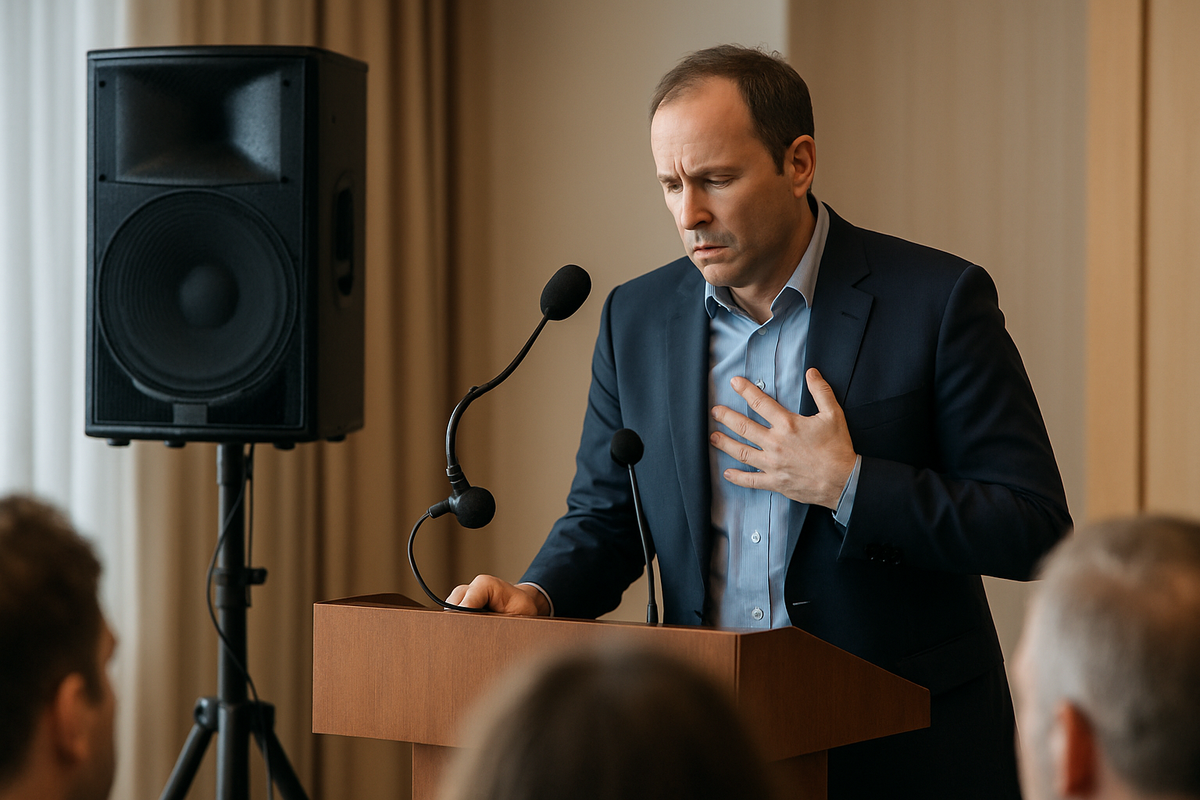
The Hidden Dangers of Audio Equipment Malfunctions in Professional Settings
Corporate events demand flawless execution, yet audio equipment failures consistently emerge as the primary culprit behind catastrophic presentation disasters. These technical malfunctions don't merely inconvenience attendees—they demolish credibility, fragment audience engagement, and transform meticulously planned gatherings into memorable debacles for all the wrong reasons.
Professional event orchestration hinges upon acoustic clarity and seamless sound transmission. When corporate event audio equipment problems surface unexpectedly, they cascade through every aspect of the proceedings, creating ripple effects that extend far beyond the immediate technical hiccup. Understanding these vulnerabilities becomes paramount for event production companies and corporate meeting planners who stake their reputations on delivering impeccable experiences.
The intricate ecosystem of professional audio systems encompasses multiple interconnected components, each representing a potential failure point. From transduction elements to signal processing units, every piece of equipment operates within precise tolerances that, when exceeded, result in system degradation or complete operational collapse.
Microphone System Breakdowns: When Voices Disappear
Wireless Transmission Interference and Signal Dropout
Wireless microphone systems face an increasingly congested electromagnetic spectrum, where interference from various sources creates unpredictable signal dropouts and audio degradation. Corporate venues often harbor hidden interference sources—LED lighting systems, Wi-Fi networks, HVAC controls, and even mobile devices—that operate on frequencies dangerously close to professional audio bands.
The phenomenon of intermodulation distortion occurs when multiple wireless systems operate simultaneously without proper frequency coordination. This creates phantom frequencies that manifest as sudden audio cutouts, distorted vocal reproduction, or complete signal loss during critical presentation moments. Environmental factors compound these challenges, as concrete structures and metallic surfaces create multipath reflections that fragment wireless signals.
Battery depletion represents another insidious failure mode. Rechargeable battery packs gradually lose capacity over time, creating unpredictable runtime characteristics that leave speakers literally speechless mid-sentence. Temperature fluctuations common in corporate venues accelerate battery discharge rates, making accurate runtime predictions nearly impossible without sophisticated monitoring systems.
Physical Connector Degradation
XLR connectors, despite their robust design, succumb to mechanical wear through repeated connection cycles. Internal contact surfaces develop oxidation layers that increase resistance and introduce intermittent connectivity issues. These microscopic degradations manifest as crackling sounds, intermittent audio, or complete signal interruption when connectors experience slight movement.
Phantom power delivery through degraded connectors creates additional complications. Condenser microphones require stable 48-volt phantom power for proper operation, and compromised connections deliver inconsistent voltage levels that result in unpredictable microphone performance, noise floor elevation, or complete operational failure.
Speaker and Amplification Disasters
Thermal Protection Shutdowns
Professional amplifiers incorporate thermal protection circuits designed to prevent component damage during extreme operating conditions. However, these protective mechanisms often engage unexpectedly during corporate events, particularly when ambient temperatures rise or ventilation systems prove inadequate for sustained operation.
Class D amplifiers, while energy-efficient, exhibit particular sensitivity to thermal stress. Their switching power supplies generate concentrated heat loads that require sophisticated cooling systems. When thermal thresholds are exceeded, amplifiers enter protection mode, silencing entire speaker zones without warning. Recovery requires extended cooling periods that may span several minutes—an eternity during live presentations.
Dust accumulation within amplifier cooling channels exacerbates thermal issues. Corporate venues often feature HVAC systems that circulate fine particulates, which gradually coat amplifier heat sinks and reduce thermal transfer efficiency. This invisible degradation process slowly decreases thermal headroom until even moderate power demands trigger protection shutdowns.
Driver Component Failures
Loudspeaker transducers operate under extreme mechanical stress, converting electrical energy into acoustic output through precise cone and coil movements. Voice coil thermal failures occur when power levels exceed design parameters, causing coil wire insulation to break down and create short circuits or open connections.
"The difference between a successful corporate event and a technical disaster often comes down to understanding the thermal limits of your amplification systems and implementing proper cooling strategies." - Audio Engineering Specialist
Cone separation represents another catastrophic failure mode where the speaker cone detaches from its suspension system due to adhesive degradation or excessive excursion. These failures typically occur suddenly and completely eliminate audio output from affected drivers, creating dead zones in the coverage pattern that leave portions of the audience unable to hear presentations clearly.
Mixing Console and Processing Equipment Malfunctions
Digital Processing Glitches
Modern digital mixing consoles rely heavily on embedded computer systems running complex real-time operating systems. These sophisticated platforms occasionally experience software crashes, firmware corruption, or memory allocation errors that result in complete system lockups or unpredictable behavior during operation.
Sample rate mismatches between connected digital devices create another layer of potential failure. When mixing consoles, digital processors, and recording systems operate at different sample rates, synchronization issues arise that manifest as clicking sounds, dropouts, or complete audio interruption. Clock synchronization becomes critical in complex digital audio networks, where even microsecond timing discrepancies accumulate into audible artifacts.
Buffer underruns occur when digital processing systems cannot maintain adequate data throughput to support real-time audio processing. These events typically result from excessive CPU loading, inadequate memory bandwidth, or network congestion in networked audio systems. The result is momentary silence, digital noise bursts, or complete system audio failure.
Analog Circuit Degradation
Analog mixing consoles contain numerous precision components that gradually drift from their specified values over time. Operational amplifiers develop offset voltages that introduce noise and distortion. Capacitors lose capacitance, altering frequency response characteristics and potentially causing oscillation in feedback-prone circuits.
Fader contact oxidation creates a particularly frustrating failure mode where channel levels become unpredictable or develop scratchy, intermittent behavior. Carbon-composition faders are especially susceptible to this degradation, which typically manifests as sudden volume jumps or complete signal interruption when faders are adjusted.
Cable and Connection Point Failures
Signal Path Interruption
Professional audio cables endure tremendous mechanical stress during setup, operation, and teardown phases of corporate events. Internal conductor fractures develop gradually through repeated flexing cycles, creating intermittent connections that fail unpredictably when cables experience movement or vibration.
Balanced audio cables rely on precise impedance matching and common-mode rejection to maintain signal integrity. When internal conductors partially fail or shielding becomes compromised, the balanced transmission characteristics deteriorate, allowing noise infiltration and reducing the system's ability to reject electromagnetic interference from lighting systems and other electronic equipment.
Ground loop formation occurs when multiple equipment pieces connect to different electrical ground potentials through their audio interconnections. These potential differences create circulating currents that manifest as audible hum, buzz, or noise that varies with lighting dimmer positions and other electrical load changes within the venue.
Environmental Stress Factors
Corporate venues present challenging environmental conditions that accelerate cable degradation. HVAC systems create temperature fluctuations that cause repeated expansion and contraction cycles in cable conductors and insulation materials. Humidity variations affect insulation resistance and can promote corrosion in connector contact surfaces.
Mechanical stress from foot traffic, equipment rolling over cables, and improper cable management practices creates stress concentration points where internal failures initiate. These damage accumulation processes remain invisible until complete failure occurs, typically at the most inconvenient moment during live presentations.
Power Supply and Electrical System Complications
Voltage Regulation Instabilities
Professional audio equipment requires stable electrical power to maintain optimal performance characteristics. Corporate venues often feature electrical distribution systems that exhibit significant voltage fluctuations, particularly when large HVAC systems, lighting dimmer racks, or other high-power equipment cycles on and off during events.
Switching power supplies, while efficient, demonstrate sensitivity to input voltage variations and power quality issues. Voltage sag events can cause power supply shutdown, while overvoltage conditions may trigger protective circuits that remove equipment from operation. These power anomalies frequently coincide with critical presentation moments when electrical loads throughout the venue reach peak demand.
Ground potential differences between electrical outlets create another layer of complications. When audio equipment connects to outlets supplied from different electrical panels or circuits, varying ground potentials can introduce noise, hum, or even create safety hazards through circulating ground currents.
Power Distribution Overloads
Inadequate electrical power distribution planning leads to circuit overloading that triggers protective breaker operation during events. Professional amplifiers draw significant current during peak audio passages, and these demand spikes can exceed available circuit capacity, particularly when combined with lighting and other equipment loads.
Harmonic distortion from switching power supplies and LED lighting systems creates additional stress on electrical distribution circuits. These non-linear loads generate current harmonics that can overload neutral conductors and create voltage distortion that affects sensitive audio equipment performance.
| Failure Type | Typical Warning Signs | Prevention Strategy |
|---|---|---|
| Wireless Interference | Intermittent dropouts, static | Frequency coordination, site survey |
| Thermal Shutdown | Reduced output, protection indicator | Adequate ventilation, power management |
| Cable Degradation | Intermittent signal, noise introduction | Regular inspection, proper handling |
| Power Issues | Equipment reset, voltage fluctuation | Power conditioning, dedicated circuits |
| Digital Processing | System lockups, synchronization errors | Firmware updates, proper configuration |
Preventive Measures and Risk Mitigation Strategies
Implementing comprehensive preventive maintenance protocols significantly reduces the likelihood of catastrophic audio equipment failures during corporate events. Regular inspection schedules should encompass all system components, from individual cable connections to complex digital processing units.
Environmental monitoring becomes crucial for predicting potential failure modes. Temperature sensors, humidity monitors, and power quality analyzers provide early warning of conditions that stress equipment beyond design parameters. These monitoring systems enable proactive intervention before failures occur.
Redundancy planning offers the ultimate protection against single-point failures. Backup microphone systems, spare amplifiers, and alternate signal routing paths ensure continuity of operation even when primary components fail. However, redundancy systems require regular testing and maintenance to guarantee their availability when needed.
What specific environmental factors in your venue might contribute to accelerated equipment degradation? Understanding these unique challenges enables targeted mitigation strategies that address the most probable failure modes in your specific operational context.
When to Seek Professional Assessment
Recognizing the early warning signs of impending equipment failure enables timely intervention that prevents catastrophic breakdowns during critical events. Subtle changes in audio quality, intermittent operational anomalies, or increased noise floors often precede complete system failures by days or weeks.
Professional diagnostic equipment can reveal degradation patterns invisible to casual observation. Spectrum analyzers identify frequency response deviations, oscilloscopes reveal signal integrity issues, and thermal imaging cameras detect developing hot spots in amplification systems before thermal protection circuits engage.
The investment in professional assessment and preventive maintenance pales in comparison to the costs associated with failed corporate events. Reputation damage, client dissatisfaction, and emergency equipment replacement expenses far exceed the costs of proactive maintenance programs.
How frequently should professional audio systems undergo comprehensive diagnostic evaluation? The answer depends on utilization patterns, environmental conditions, and the criticality of supported events, but quarterly assessments represent a reasonable baseline for most corporate applications.